EdTech · Superstar Academy
Superstar Academy — learning through play
Turning KS2 maths practice into a football-themed game kids enjoy spending time on.

How do you improve maths scores among under-8s when they find the subject boring?
Our approach was to improve their relationship and exposure to certain numbers (Usually what adds up to 10. i.e 6-4, 8-2). With this simplified target in place, we improved children's maths scores and ability, making them notably quicker at basic arithmetic through football-themed mini-games.
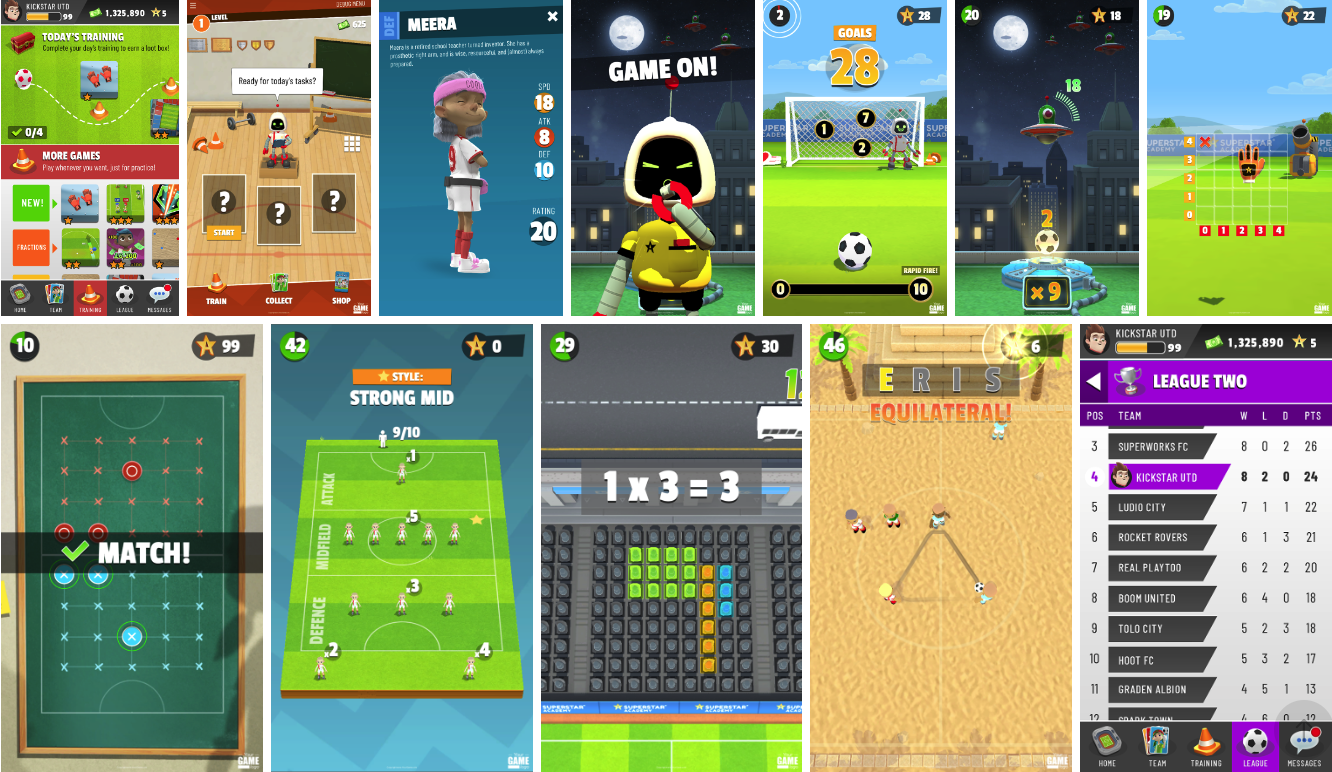
• Measurable improvement in maths scores
Children who played our games consistently performed faster at maths outside the game environment.
• Learning without realising it
By repeatedly making basic number relationships familiar in non-mathematical settings, we engaged children so effectively that they were learning without conscious effort. "Obviously the answer is X" became a frequent and encouraging piece of feedback.
• Visible progress for parents
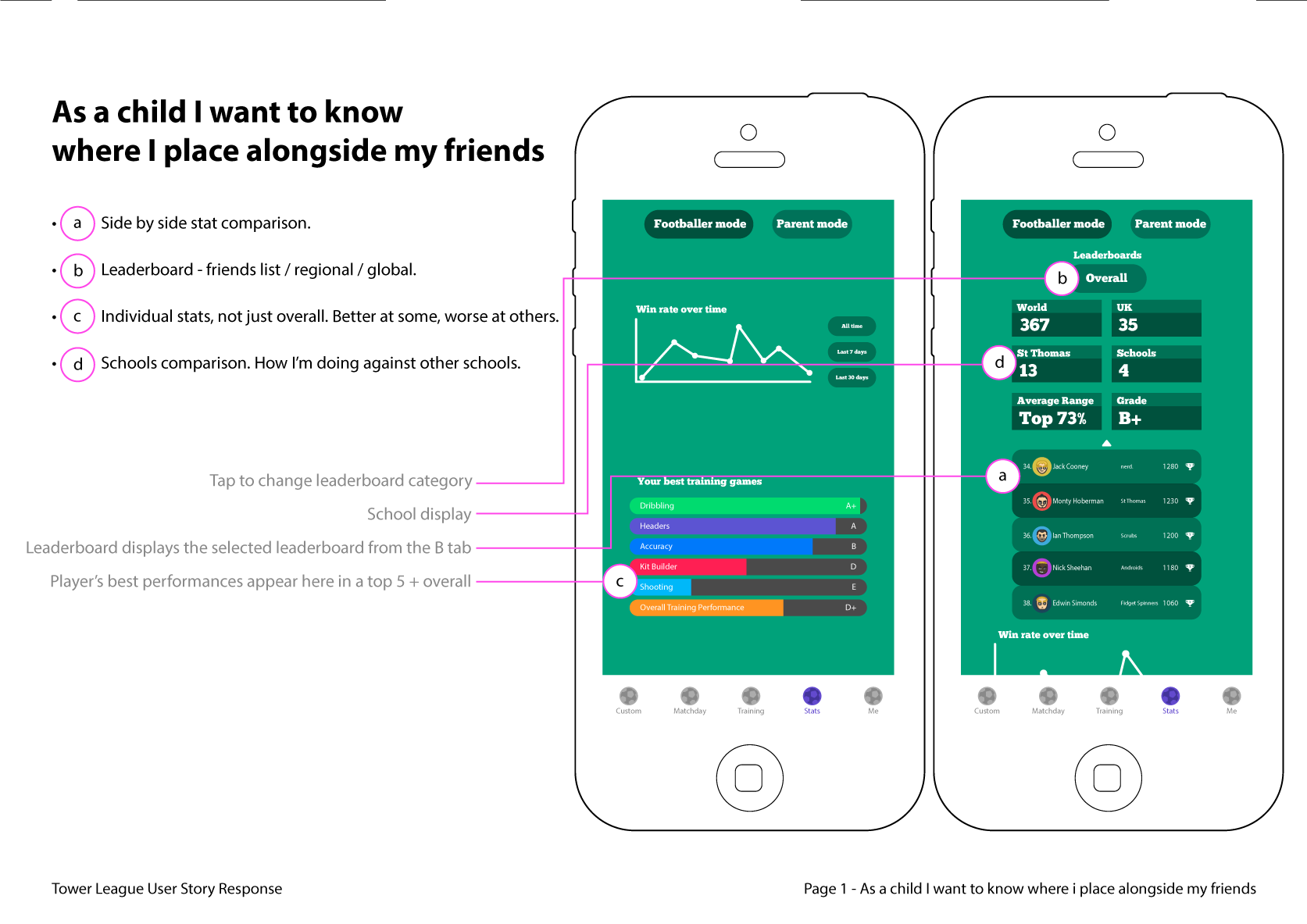
The volume of performance data is considerable, so we distilled it into a messaging format that makes it straightforward for parents to track their child's improvement in speed, experience and accuracy.
This remains one of our favourite projects. It's a privilege to see your work have a proven effect on people's lives.
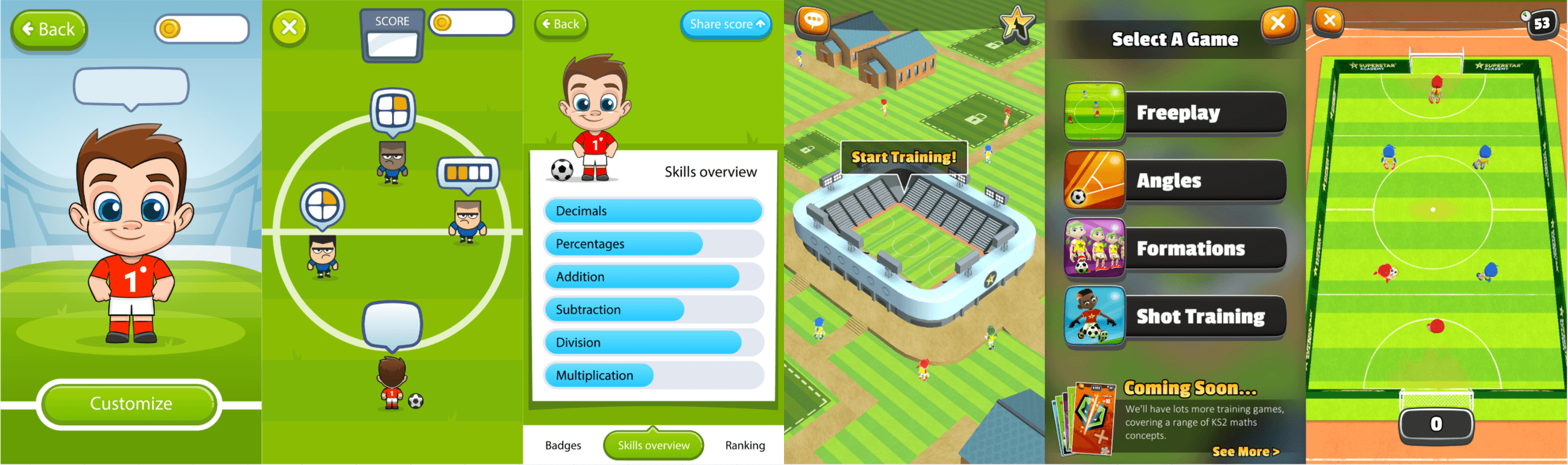
We identified that most Ed-tech products simply translate textbook exercises into text inputs with a layer of game visuals over the top. We had no interest in doing that, because it isn't fun.
If it isn't fun, children disengage. It was essential that the games were genuinely enjoyable, linking the official curriculum to skill-based, action-driven outcomes instead.
If it isn't fun, children disengage. It was essential that the games were genuinely enjoyable, linking the official curriculum to skill-based, action-driven outcomes instead.
Translating curriculum into real gameplay was a substantial challenge, and an enjoyable one.
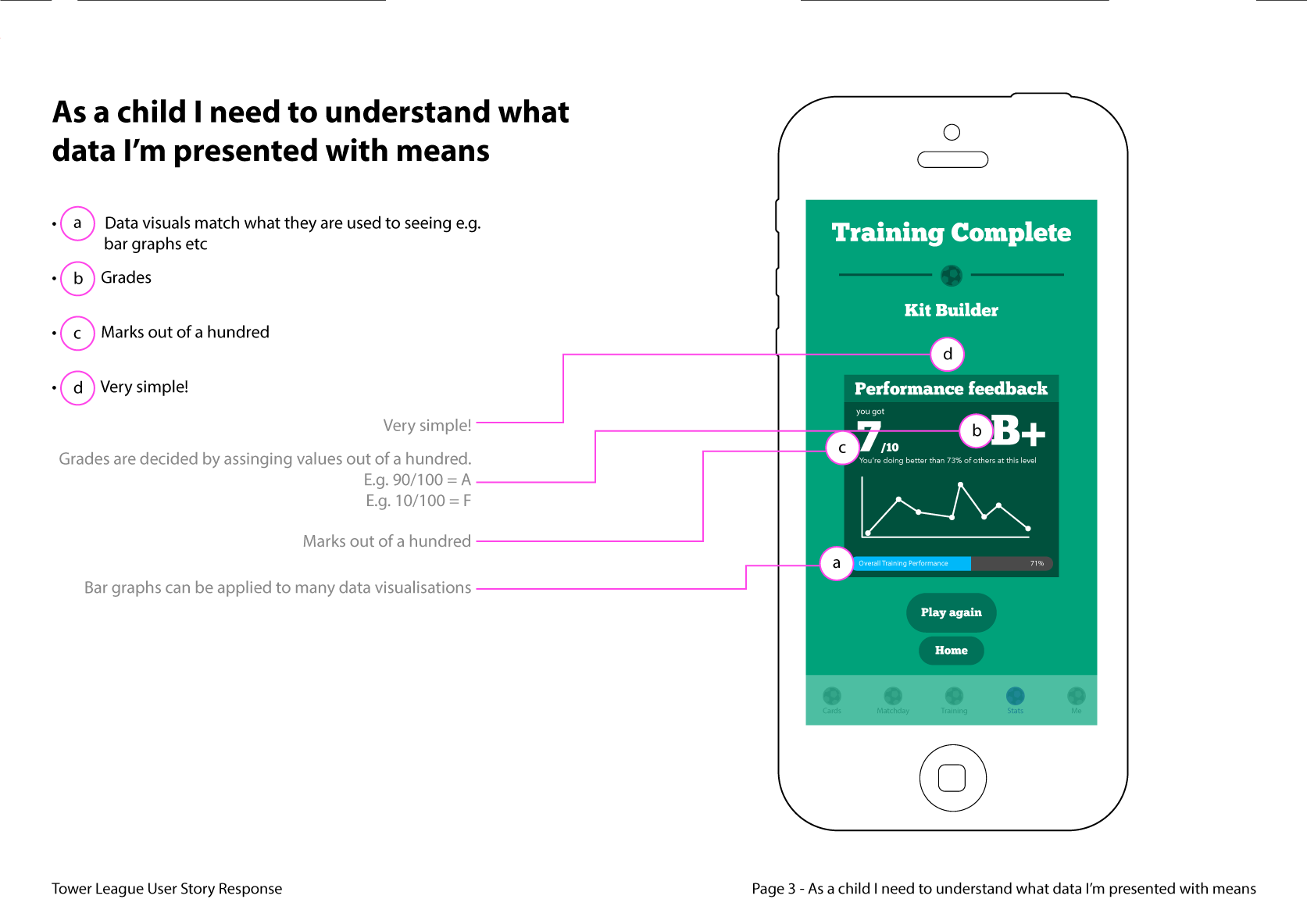
Performance was visualised in a report sent to parents, showing their child's progress across speed, understanding and familiarity.
Competition matters in education, so we allowed scores to be compared within a child's class, against other schools in the region, and against the top performers nationally.
nerd. agency
🇬🇧 Plexal, Queen Elizabeth Olympic Park, London E15 2GW
🇨🇦 137 Glasgow St, Kitchener, ON, N2G 4X8
🇨🇦 137 Glasgow St, Kitchener, ON, N2G 4X8
Copyright 2026 Nerd Agency. All Rights Reserved